 Skip to main content


We get asked the same questions multiple times a day: "How do I get rid of dust mites?" and "How do I kill dust mites?" It's easy to see why, because dust mites cause so many problems for so many people.
The Mayo Clinic notes that dust mite allergy often looks like hay fever, with sneezing and a runny nose. Some people also develop asthma symptoms such as wheezing and trouble breathing, or skin rashes. Reducing the number of dust mites in your home can help you get those symptoms under control.
We've been helping people do exactly that since 1989. Here are the 6 most effective methods we know.
6 Highly Effective Ways to Get Rid of Dust Mites
- Get Rid of Their Home (or Make It Uncomfortable)
- Starve the Enemy
- Weekly Washing and Laundry Additives
- Frequent Vacuuming and Dusting
- Deep Freeze
- Desiccants
Before we get into each method, let's cover the basics, because the first rule of warfare is to know your enemy.
Know Your Enemy: Dust Mite Facts
- Dust mites, their body parts, and their feces are the most common household allergens.
- Allergens are the source of sneezing, coughing, itchy, watery eyes, stuffy noses, eczema, and asthma.
- Dust mites are microscopic creatures that feed on shed human skin cells.
- Dust mites do not bite you. You cannot see or feel them.
- They prefer areas that are dark, moist, and full of their favorite food.
- Your mattress, pillow, and blanket are the perfect environment to meet all their needs.
One more critical fact: a dead dust mite is just as bad for you as a live one. The allergen comes from their body parts and feces, so killing the mite doesn't remove it. That's why dust mite-killing sprays alone are not an effective allergy control strategy. You need to remove or block the allergen, not just kill the mite.
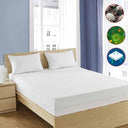 |
Where most people should start AllergyCare™ Cotton Mattress Encasing A zippered barrier that encases your mattress on all six sides and blocks the allergens you can't wash out. 100% cotton, breathable, and chemical-free. 209 customer reviews. From $50.39. Shop mattress encasing |
1. Get Rid of Their Home (or Make It Uncomfortable)
Dust mites look for places that are dark, warm, and full of shed human skin cells. They love fiber surfaces, and removing them from fabric takes a multi-pronged approach.
Carpeting
Carpets hold the dead body parts and feces that make up normal household dust. Carpet cleaning will make a carpet look and smell cleaner, but you can't really clean deep down where the allergens live. Even steam cleaning may kill mites but won't remove the allergens already embedded in the fibers.
That's why allergists consistently recommend hard-surface flooring: tile, hardwood, laminate, engineered wood, vinyl, or concrete. Small throw rugs that can be washed weekly are acceptable. Everything else should go.
If replacing carpet isn't financially feasible right now, X-Mite Powder is a cost-effective alternative:
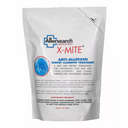 |
Allersearch X-Mite Anti-Allergen Powder Rids carpeting and upholstered furniture of dust mite allergens and cleans while it denatures. Up to 90 days of relief per application. Shop X-Mite Powder |
Furniture
Like carpet, upholstered furniture hides allergens that can't be thoroughly cleaned. Replace it with hardwood, leather, or synthetic leather when possible. Hard surfaces don't collect allergens and are easy to wipe clean.
If you can't ditch the couch, curtains, or carpet, apply a denaturing agent. These come as sprays and powders (look for "ADMS Anti-Allergen Spray," "X-Mite Powder," and "Anti-Allergy Solution Spray"), and they work by breaking down the protein that causes the allergic reaction.
Window Coverings
Replace draperies with hard-surface blinds. If curtains and valances stay, wash or vacuum them regularly and treat them with anti-allergen spray.
Dust Catchers and Clutter
Wipe down all hard surfaces at least every 7 days. For dusting, we like Allerdust Dusting Aid, which gets rid of dust mites and also helps with pet dander and mold. And while you're at it, clear out the clutter and excess pillows from the bedroom. Do you really need 12 pillows on the bed?
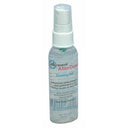 |
Allersearch Allerdust™ Dusting Aid Traps and removes dust mite allergens, pet dander, and mold as you dust, instead of just scattering them into the air. Shop Allerdust |
2. Starve the Enemy
It isn't practical to wash your mattress, box spring, and pillows every week. Since you can't remove dust mites and their allergens from these items, you need to put a barrier between you and the mites and starve them.
Encase your mattress, box spring, and every pillow in zippered dust mite-proof covers. These allergen-proof encasements cut off the mites' food supply, which is your shed skin cells. Over time, the mites already inside the mattress die off. Starting the first night, your exposure to dust mites, their shed body parts, and their feces drops sharply.
A few things to know when choosing covers:
- Full encasement matters. The cover must zip completely around all six sides of the mattress. Fitted-sheet-style covers wrap only the top and sides. The exposed bottom lets allergens migrate out, so they offer far less protection.
- Pore size matters. Dust mite allergen particles are 10 to 40 microns in size. Our AllergyCare™ covers have pore sizes between 3.2 and 5.3 microns, far smaller than the particles they need to block.
- Cover every surface. Don't forget the box spring and every pillow on the bed, including the spare ones. An uncovered pillow is an allergen source inches from your face all night.
Also, hang comforters, bedspreads, and blankets outside in direct sunlight when you can (especially wool or silk). The sun will kill the mites. Just know that bedding left outside can collect pollen, so this is a trade-off depending on your allergy triggers.
Not sure which cover is right for your mattress type?
Read the mattress cover buying guide3. Weekly Washing and Laundry Additives
If you can get an item into the washing machine, you can get rid of allergens in it. Remove and wash all bed linens once a week, and leave the zippered encasement on the mattress as your permanent dust mite barrier.
Here's the catch: regular detergent alone won't remove all of the dust mite allergen. You don't need scalding-hot water to fix that. Wash in warm water, no hotter than 120°F, and let a laundry additive do the work.
Two laundry additives are built for the job:
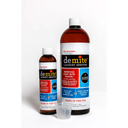 |
De-Mite Laundry Additive Tea tree oil, oil of wintergreen, and benzyl benzoate kill dust mites directly, even in warm or cold water, and the wash cycle rinses the dead mites and their allergens away. Great for bedding, clothing, stuffed animals, and towels. Shop De-Mite |
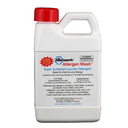 |
Allersearch Allergen Wash Super surfactant agents and ACARIL physically strip allergens from fabric during the wash cycle, rather than killing mites directly. Shop Allergen Wash |
Steam cleaning kills mites on contact and is all-natural, which makes it a good option for items that can't be machine washed. Dry cleaning will handle surface soil but won't kill dust mites.
4. Frequent Vacuuming and Dusting
Always dust with damp cloths, never dry. Start at the top of the room and work down, so anything disturbed from higher surfaces settles onto areas you haven't cleaned yet.
Tip: Don't dust right before bed. Wait at least 2 hours after dusting before sleeping in a room. Even damp dusting stirs some particles into the air, and you want to give them time to settle.
Vacuum with a HEPA-filtered vacuum cleaner. Canister models are generally preferred over uprights because they have better seals. Look for a completely sealed system so dust and allergens don't leak back out of the unit. Avoid bagless models, because emptying the bin releases collected allergens right back into the air.
Use the same top-to-bottom rule for vacuuming as you do for dusting.
Is your vacuum helping or aggravating your allergies?
Shop HEPA vacuum cleaners5. Deep Freeze
Your freezer wasn't really designed to store bed linens, and the chicken and ice cream might object. But freezing works extremely well for stuffed toys and small pillows.
Place the item in a sealed plastic bag and put it in the freezer overnight. If your child can't bear to be separated from a favorite toy overnight, do it first thing in the morning and leave it for 6 to 8 hours.
After freezing, toss the item into the dryer on the air-only (no-heat) fluff setting. This restores the shape and removes the dead mites. Then hand it back to your child knowing you did your part.
6. Desiccants
Dust mites don't drink water. They absorb moisture from the air around them, which is why they thrive in humid environments. Drying out the space makes it inhospitable.
Common household desiccants include borax (the traditional laundry additive; look for 20 Mule Team Borax in the laundry aisle), calcium chloride (also sold as "Pickle Crisp Granules" by Ball in the canning aisle), and silica gel (available at craft stores, used for drying flowers).
Safety note: borax and calcium chloride can irritate skin and eyes and are harmful if swallowed. Follow the label and keep them well out of reach of children and pets.
Important note: there is no strong scientific consensus that desiccants directly kill dust mites at typical household use levels. But by keeping humidity below 50%, they make the environment much less hospitable. A simple hygrometer will tell you whether you're actually below 50%, and a dehumidifier is the usual fix if you're not. Combined with the other methods above, humidity control is a meaningful part of a complete approach.
Frequently Asked Questions
Do dust mite sprays actually work on their own?
Not by themselves. Killing the mite doesn't remove the allergen. The allergy trigger is in the mites' body parts and feces, which stay behind after the mite dies. Sprays work best alongside encasements, weekly washing, and vacuuming, not as a standalone fix.
How often should I wash bedding to control dust mites?
Once a week, while keeping a zippered mattress encasement on at all times. Wash in warm water, no hotter than 120°F, with De-Mite Laundry Additive or Allersearch Allergen Wash. You don't need scalding-hot water to remove dust mite allergen.
Will a fitted-sheet-style mattress cover protect me?
Not nearly as well as a full encasement. Fitted-style covers wrap only the top and sides of the mattress and leave the bottom exposed, so allergens can migrate out through the open side. A zippered encasement that covers all six sides is the reliable way to block them.
Can I get rid of dust mites just by cleaning more?
Not entirely. Dust mites feed on shed human skin cells, which every person produces no matter how clean the home is. You can reduce their numbers and your exposure to their allergens, but total elimination isn't realistic. That's why this guide focuses on layered methods: barriers, heat, cold, and humidity control.
The Bottom Line
Sadly, you can be the cleanest person in the world and still have a problem with dust mites. They feed on shed skin cells, something every human produces regardless of how clean their home is. If you wake up every morning with bleary eyes, a runny nose, and a cough, you may be under attack from these microscopic opponents.
Dust mite allergens are at the center of most household allergies. They're hard to beat, but now that you know what you're up against, you can prepare to fight back and win.
Ready to start? Cover your mattress first.
We've been helping people with allergies and asthma since 1989.
Shop mattress encasingBrowse all dust mite allergy relief products
Not sure where to begin? Call us at (800) 771-2246 and we'll walk you through the right approach for your situation.
Sources and further reading
Mayo Clinic. Dust mite allergy: Symptoms and causes.
National Institute of Environmental Health Sciences. Dust Mites.
Medical disclaimer: This content is for educational and informational purposes only and is not intended as medical advice. Always consult a qualified healthcare provider regarding allergies, asthma, or other medical conditions.
Want the complete picture? This page is part of our free Practical Guide to Allergy-Free Living, which draws on decades of allergy expertise and covers dust mites, pet dander, air quality, laundry, and more. Start at the beginning or jump to the section that matters most to you.