 Skip to main content


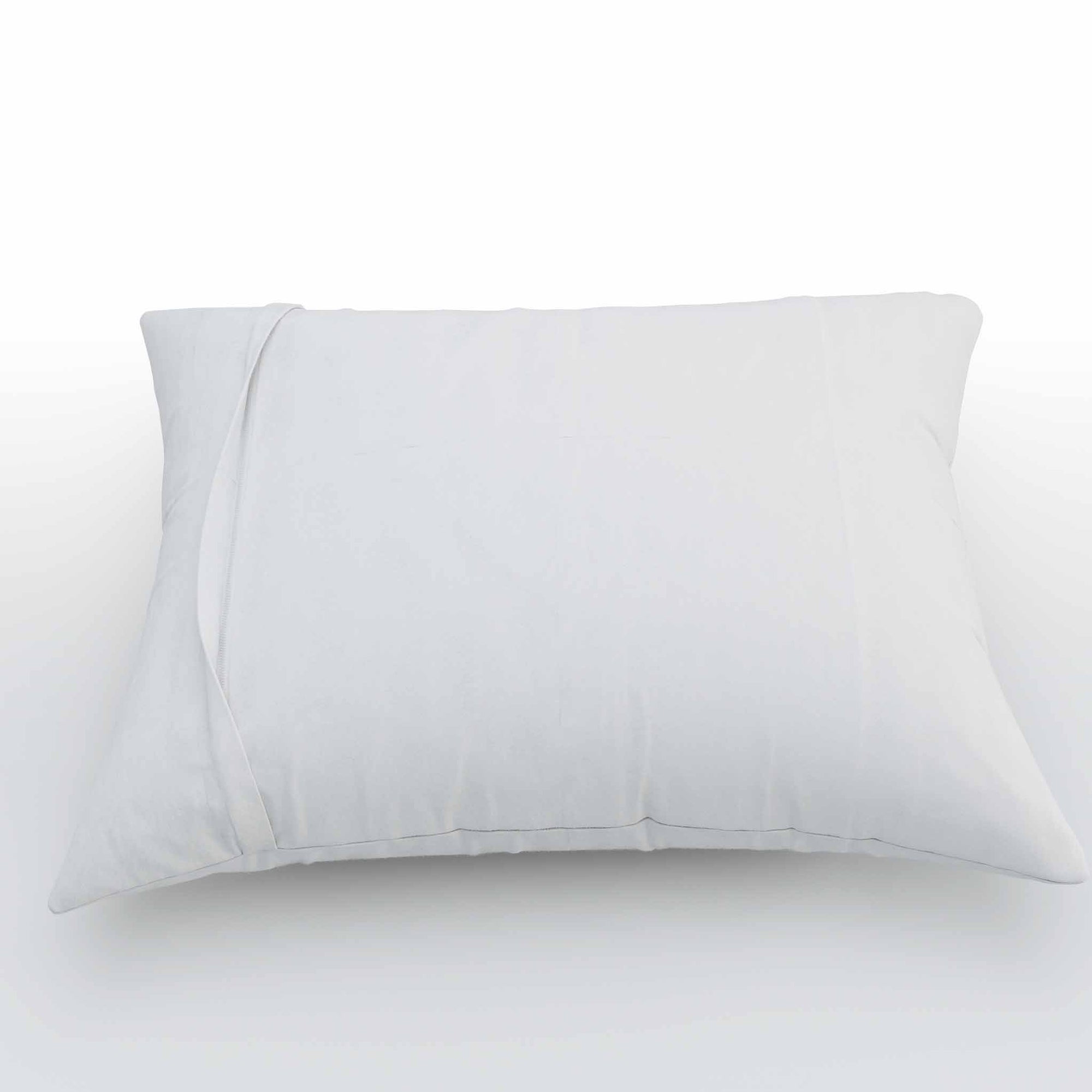

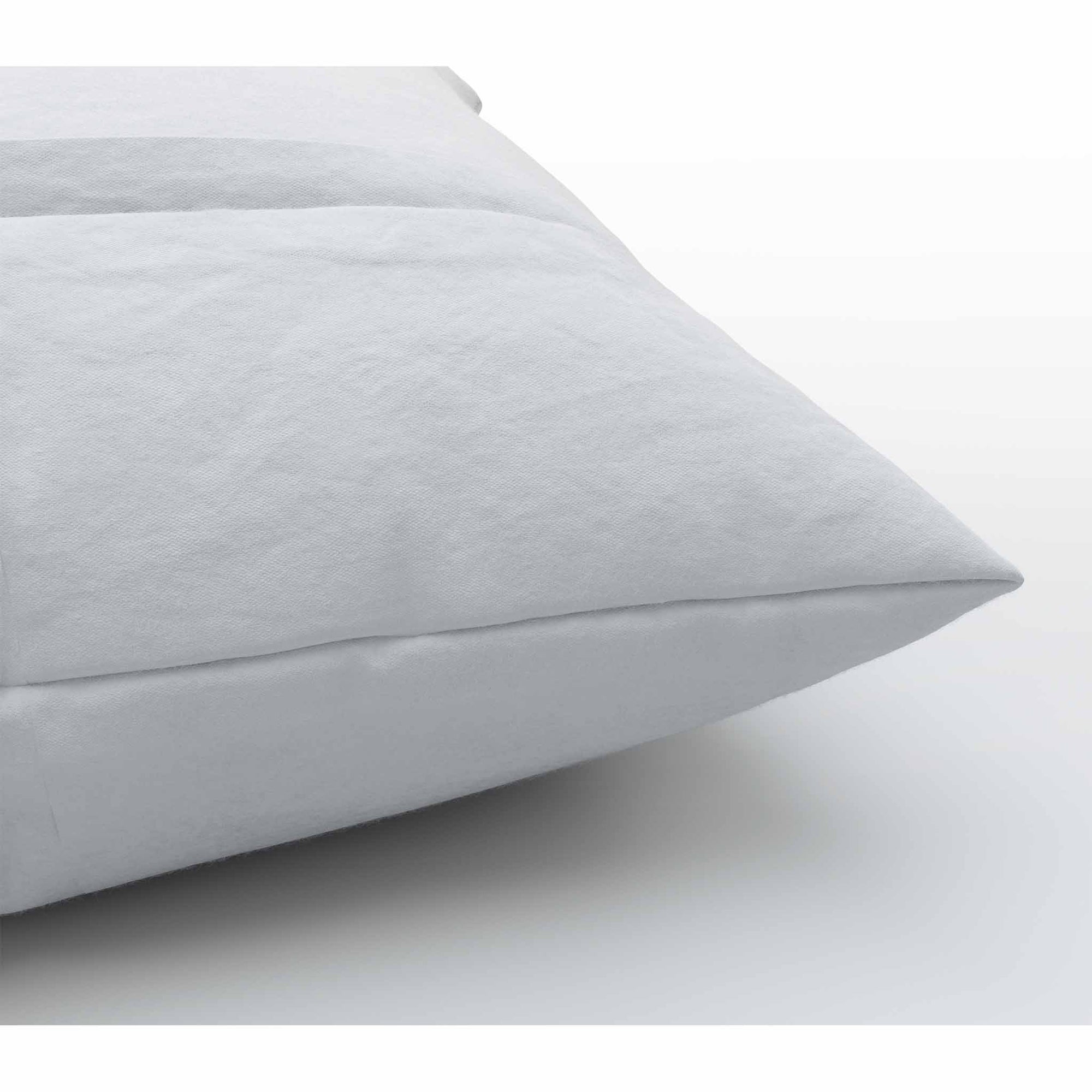


Sleep cooler and breathe easier at night. AllergyCare™ 100% Cotton pillow covers are perfect for hot sleepers: woven from naturally soft cotton with no chemical or antimicrobial finishes, and no vinyl, phthalates, or PVC. Made with materials certified to OEKO-TEX® STANDARD 100, and independently lab-tested at a 4.47-micron mean pore size, it's a breathable barrier fabric built for comfort.
At about 4.5 microns, AllergyCare™ Cotton's mean pore size is far smaller than dust mites and below the pore sizes research has found block dust mite and cat allergens. The cover puts that tightly woven fabric between you and the allergens that have built up inside your pillow over time, from the very first night.
COOL & BREATHABLE PROTECTION
Unlike synthetic or vinyl covers that trap heat and crinkle with every move, AllergyCare™ breathes naturally, with the same soft, cool feel as your favorite cotton sheets. No plastic feel, no noise, no compromise on comfort. Just cleaner, more comfortable sleep.
FULL ENCASEMENT
Each cover fully encases your pillow and zips closed with a heavy-gauge, rust-proof zipper. Think of it as placing your pillow inside a protective fabric envelope that keeps dust mites and their allergens on the inside, away from you.
- No chemical or antimicrobial finishes.
- OEKO-TEX® STANDARD 100 — Tested for harmful substances. Certificate 22.HCN.24342, Hohenstein.
- Soft, cool, breathable, and comfortable.
- Heavy-gauge nylon zippers with coated, rust-proof metal zipper pulls.
- High-quality 233 thread count.
- 4.47 µm mean pore size (Lab Test Report, Sept 2026)
- Latex-free.
- Manufacturer's Limited Lifetime Warranty.
Pillows are NOT included.
Also available in AllergyCare 100% Cotton: mattress covers, duvet covers, and comforter covers.
Easy Care Instructions
Machine wash in hot water up to 140°F. Do not use chlorine bleach. Machine dry on medium setting. Covers can also be washed in cold or warm water with De-Mite Laundry Additive or Allersearch Allergen Wash.
Special Note: The cover must be completely dry before placing on pillows.
Commonly asked questions about pillow covers
1. Do I need to wash the cover before first use?
No. It is not necessary. We do not treat any of our fabrics with chemicals or antimicrobial coatings. Please note that we do not accept the return of washed covers unless they are defective.
2. How often should I wash the pillow cover?
We recommend washing pillow covers every 4 to 6 weeks. Your pillowcases, which go on top of the cover, should be washed weekly along with your sheets.
3. Will the cover shrink when I wash it?
Like all 100% cotton products, the cover will shrink slightly when washed and dried for the first time. We have accounted for this and made the covers slightly larger, so they will not be too small after the first wash.
4. Do I need to cover every pillow on the bed?
Yes. Every pillow you actually sleep on should be covered. An uncovered pillow is an allergen source inches from your face for 7 to 8 hours every night. Decorative pillows that you remove from the bed at night do not need covers; just tumble them in the dryer on the air-fluff setting monthly to remove accumulated dust.
5. Does the cover work if my pillow already has dust mites in it?
Yes. The tightly woven fabric keeps the dust mites and allergens already inside the pillow away from you, and keeps new mites from moving in. The barrier is in place from the very first night.
6. What size should I order?
Measure your pillow. Standard, queen, and king sizes are available. If your pillow falls between sizes, choose the larger size for a looser, more comfortable fit. A cover that is too tight stresses the seams and zipper over time.
Additional information
Why encasements are step one.
Allergen-impermeable covers for your mattress, box spring, and pillows are a core part of the dust mite control measures in the AAAAI/ACAAI Joint Task Force practice parameter on dust mite exposure control. Our Practical Guide to Allergy-Free Living explains exactly how encasements work, which fabric is right for your sleep style, and how they fit into a complete allergen reduction strategy.