 Skip to main content


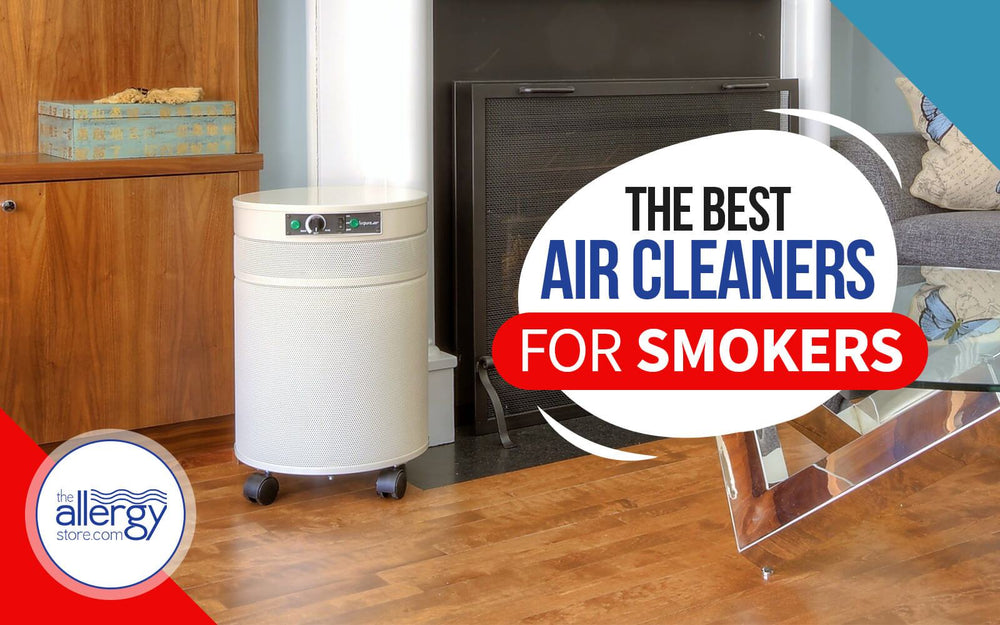
Whether it's your own smoking, a housemate's, secondhand smoke drifting in from a shared hallway, or lingering odor from a previous tenant, tobacco smoke is one of the harder things to clean from indoor air. If you have allergies, asthma, or another respiratory condition, that makes it even more worth tackling.
Cleaning the air for tobacco smoke is a different job than cleaning it for dust, pollen, or pet dander. Smoke is both particles and gases, so a filter built only to catch particles misses a lot of what makes smoke irritating and unpleasant. Here is what we have learned about choosing an air cleaner for smoke, and two of our favorites.
What Makes Smoke Different to Filter
For allergies and asthma, the main job is removing particles, and a true HEPA filter handles that well. Tobacco smoke adds a second job: removing gases and chemicals, including the compounds that carry smoke's odor and some of its more harmful components. If an air cleaner only removes particles, it is not built for smoke.
That second job calls for activated carbon, a material that adsorbs (chemically binds) gases and odors as air passes through it. The more carbon a unit has, and the fresher it is, the better it performs against smoke.
What Air Cleaners Can and Can't Do About Smoke
Before we get to specific units, it is worth being honest about what an air cleaner can and cannot do. The CDC is clear that there is no risk-free level of secondhand smoke, and even brief exposure can cause harm. Separating smokers from others, cleaning the air, and ventilating a building do not eliminate that exposure.
The EPA says much the same about air cleaning on its own: it is not a substitute for removing the source, and air cleaning alone cannot guarantee good indoor air quality where tobacco smoke is a significant, ongoing source. Even a well-built unit can leave behind odorous compounds and some of the gas-phase pollutants in smoke. The most effective step is not smoking indoors in the first place, or asking others not to.
Important note: An air cleaner can meaningfully reduce smoke particles, odor, and some chemicals in a space. It is a tool for improving air quality, not a way to make indoor smoking risk-free for you or anyone else in the home.
With that in mind, here are two air cleaners built with smoke in mind, both of which pair true HEPA filtration with a substantial carbon bed for gases and odors.
Airpura T600 Air Purifier
The Airpura T600 was designed specifically to handle tobacco smoke, its particles, and its chemicals, with three features that set it apart:
- Tar pre-filter. The T600 has a dedicated TarBarrier pre-filter that traps tar the way the filter on a cigarette does, and Airpura recommends replacing it every 4 to 6 months.
- Powerful motor. A variable-speed motor moves up to 560 cubic feet of air per minute on its highest setting. The more air a unit can move, the more air it can push through the filter.
- Deep carbon bed. Airpura lists 18 to 26 lbs of activated carbon in the T600 (its product page gives both figures), which absorbs chemicals such as formaldehyde, toluene, and benzene.
The HEPA filter sits after the tar pre-filter and carbon bed, which extends its life. Under normal use, Airpura rates it for up to 5 years before it needs replacing, while the carbon filter needs replacing every 3 to 6 months and the tar pre-filter every 4 to 6 months.
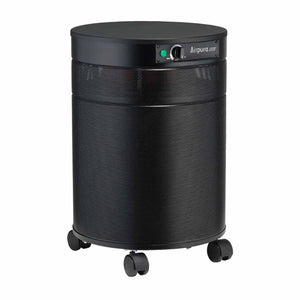 |
Airpura T600 Air Purifier Purpose-built for tobacco smoke: a TarBarrier pre-filter, a deep activated carbon bed, and a true HEPA filter, driven by a 560 CFM variable-speed motor. 5 years on parts, 10 years on labor, excluding filters. Shop Airpura T600 |
Austin Air HealthMate Plus
Austin Air is one of our go-to brands for an all-around HEPA air cleaner, and the HealthMate Plus is the model built for gases and chemicals, which makes it the Austin Air unit best suited to smoke.
Particle filtration. Like every Austin Air machine, it uses true HEPA filtration that removes 99.97% of particles as small as 0.3 microns, more than enough for the particles in tobacco smoke. It also helps with dust mite, mold, pet, and other household allergens while it is cleaning smoke particles.
Airflow. The motor is rated for 400 cubic feet of air per minute on its top speed, with a 5-year warranty on parts and labor.
Chemical and gas removal. The HealthMate Plus uses about 15 lbs of activated carbon and zeolite, a volcanic mineral that is a natural odor and gas absorber, enhanced with potassium iodide. Austin Air's own specifications list volatile organic compounds, ammonia, formaldehyde, and toluene among the chemicals it is built to reduce.
The HealthMate Plus comes in two sizes. We don't recommend the compact Junior model for tobacco smoke and odor removal, since its filter and motor are not built for that load. The full-size unit is well suited to smoke in small to medium rooms.
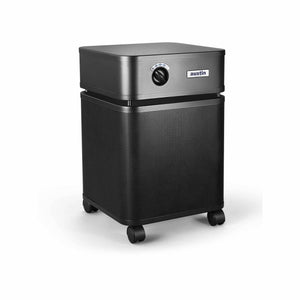 |
Austin Air HealthMate Plus True HEPA filtration plus about 15 lbs of potassium iodide-enhanced carbon and zeolite, built to reduce VOCs, ammonia, formaldehyde, and toluene along with particles. 400 CFM top speed, 5-year warranty on parts and labor. Shop Austin Air HealthMate Plus |
Tip: Activated carbon has a limited capacity and gradually loses effectiveness as it absorbs more, so replace carbon filters on schedule. The EPA also notes that activated carbon is less effective against some lightweight gases, such as formaldehyde, than against larger compounds, so no carbon filter removes everything in smoke completely.
A Word About Ozone
Some machines marketed as "smoke eaters" rely on ozone to cut through smoke and odor. Ozone can be effective at masking or breaking down odors, but the EPA says ozone generators should not be used in occupied spaces, at any concentration. No federal agency has approved them for that use, and ozone can react with other indoor chemicals to form additional harmful byproducts.
We do not sell any unit that intentionally generates ozone. It is especially worth avoiding around anyone with asthma, allergies, or another respiratory condition, since ozone is a lung irritant in its own right.
Frequently Asked Questions
Can an air cleaner fully remove the health risk of secondhand smoke?
No. The CDC says there is no risk-free level of secondhand smoke, and that separating smokers, cleaning the air, and ventilating a space do not eliminate exposure. The EPA agrees that air cleaning is not a substitute for removing the source. The most effective step is not smoking indoors.
What's different about an air cleaner built for smoke versus one for allergies?
An allergy-focused air cleaner mainly needs to capture particles, which a true HEPA filter does well. Smoke also contains gases and chemicals, so a unit built for smoke needs a substantial activated carbon bed in addition to HEPA filtration.
Are ozone-based "smoke eaters" safe to use?
No. The EPA says ozone generators should not be used in occupied spaces at any concentration, and no federal agency has approved them for that use. They are especially risky for anyone with asthma or allergies.
How often do I need to replace the carbon filter?
It depends on the unit, but carbon has a limited capacity and needs regular replacement; for the Airpura T600, Airpura recommends every 3 to 6 months. Running a saturated carbon filter past its rated life lets more odor and chemicals through, and old captured pollutants can even be released back into the air.
The Bottom Line
An air cleaner with true HEPA filtration and a deep carbon bed can meaningfully reduce smoke particles, odor, and chemicals in a room, which matters whether the smoke is your own, a housemate's, or left behind by a previous occupant. It is a real improvement, just not a substitute for not smoking indoors.
Not sure which air cleaner fits your space?
Tell us your room size and what you need to remove from the air, and we will help you find the right fit.
Shop air purifiersPrefer to talk it through? Call us at (800) 771-2246.
Sources
Centers for Disease Control and Prevention. Smokefree Policies Reduce Secondhand Smoke Exposure.
U.S. Environmental Protection Agency. Residential Air Cleaners: A Technical Summary, 3rd Edition.
U.S. Environmental Protection Agency. Air Cleaners, HVAC Filters, and Coronavirus (COVID-19) (ozone generator guidance).
Medical disclaimer: This content is for educational and informational purposes only and is not intended as medical advice. Always consult a qualified healthcare provider regarding allergies, asthma, or other medical conditions.
Want the complete picture? This page is part of our free Practical Guide to Allergy-Free Living, which draws on decades of allergy expertise and covers dust mites, pet dander, air quality, laundry, and more. Start at the beginning or jump to the section that matters most to you.