 Skip to main content


If you wake up stuffy, sneeze when you make the bed, or feel worse at home than anywhere else, dust mites may be the reason. They are one of the most common year-round indoor allergy triggers, and the bedroom is where most people meet them.
So it makes sense to ask which air purifier is best for dust mite allergies. We sell air purifiers, and we recommend them. But we have been helping people with allergies since 1989, and we would rather give you the honest answer than a quick sale: for dust mites, an air purifier is a helpful supporting player, not the main event. This guide explains why, what to look for in a purifier if you want one, and the steps that do most of the work.
The short answer: The best air purifier for dust mite allergies is a true HEPA unit sized for your bedroom, quiet enough to run all night, and placed near your bed. Pair it with allergen-proof encasements, weekly washing, and humidity below 50%. Those bedding and humidity steps matter more than the purifier.
Why Dust Mites Are Different From Other Allergens
Dust mites are microscopic relatives of spiders. They live in fabric, not in the air. Mattresses, pillows, comforters, upholstered furniture, carpet, and stuffed toys give them what they need: warmth, humidity, and a steady supply of the skin flakes we all shed. They do best in warm rooms with humidity above 50%.
The allergen that makes you react comes mostly from their droppings and body fragments. Those particles are relatively large and heavy compared with pollen fragments, pet dander, or smoke. When you make the bed, flop onto the couch, or vacuum, they get kicked into the air, but they fall back onto surfaces within minutes to about half an hour.
That is the key difference. Pet dander and smoke particles are small enough to float around a room for hours, so an air purifier has plenty of time to catch them. Dust mite allergen spends most of its life sitting in your bedding, and a purifier cannot reach it there. The EPA makes the same point: filters can capture airborne dust mite allergen, but because those particles settle quickly, filtration is not very effective at removing them from a home.
What an Air Purifier Can and Can't Do
| An air purifier can | An air purifier can't |
|---|---|
| Catch allergen that gets stirred up when you make the bed, change sheets, vacuum, or move around the room. | Kill dust mites or remove them from your mattress, pillows, carpet, or furniture. |
| Lower the amount of allergen you breathe during those spikes, especially if it runs continuously. | Make up for bedding that isn't encased or washed weekly. |
| Remove other bedroom triggers that stay airborne longer, such as pet dander, pollen that comes in on clothes, and smoke. | Fix high humidity, which is what lets mites thrive in the first place. |
Laboratory testing shows the upside is real. In one chamber study, an air cleaner removed about 80% of airborne dust mite particles within 30 minutes, compared with about 10% that settled out on their own in the same time. That was a controlled test with an electrostatic and mesh unit, not a HEPA purifier in a real bedroom, but it shows that a running machine can clear stirred-up allergen faster than waiting for it to settle.
The catch is timing. The purifier only helps with allergen while it is in the air, which is why continuous running and placement near the bed matter so much.
Many people who are allergic to dust mites are also allergic to pets, pollen, or mold. If that sounds like you, a HEPA purifier earns its place in the bedroom for those triggers as well.
What to Look for in an Air Purifier for Dust Mites
True HEPA filtration
Dust mite particles are large enough that most decent filters can catch them, but a true HEPA filter (at least 99.97% of particles at 0.3 microns) also handles the smaller allergens that often travel with them, such as dander and mold spores. Skip "HEPA-type" and "HEPA-like" labels. Our guide to how HEPA filtration works explains how to check.
Sized for your bedroom, at a speed you'll actually use
Aim for at least 5 air changes per hour on the fan speed you will run overnight, not just on high. A 10 x 15 bedroom with 8-foot ceilings holds 1,200 cubic feet of air, so it needs about 100 CFM for 5 air changes per hour and about 200 CFM for 10. More air changes means stirred-up allergen gets pulled out faster, before it settles. Our HEPA guide walks through the math for your room.
Quiet enough to run all night
You spend a third of your life in bed with your face inches from your pillow, so the bedroom is where the purifier belongs. If it is too loud to sleep with, you will turn it off. Look at the decibel rating for each fan speed, and choose a unit that hits your air-change target on a setting you can sleep through.
Placed near the bed, running continuously
Put the unit within a few feet of the bed with its intake and outlet unobstructed. Run it around the clock, and bump it to a higher speed while you change sheets or vacuum and for half an hour afterward. That is when airborne allergen peaks.
No ozone, no ionizers
Avoid ozone generators and devices that intentionally produce ozone. Ozone irritates the airways, which is the last thing an allergic or asthmatic person needs in the bedroom. Ionizers don't filter anything; they charge particles so they stick to surfaces, including your bedding.
Carbon is optional
Activated carbon removes gases and odors, not dust mite allergen. It is a nice extra if you also deal with chemical sensitivity, cooking smells, or smoke, but it is not what makes a purifier work for dust mites.
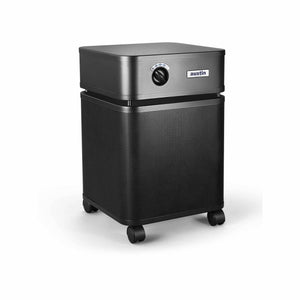
Austin Air HealthMate HM400 Air Cleaner
True medical grade HEPA with three fan speeds (75, 200, and 400 CFM). In a 10 x 15 bedroom, speed 2 gives about 10 air changes per hour, which is a good overnight setting. Filter life is rated at 5 years.
Shop Austin Air HM400For a smaller bedroom, the HealthMate Junior HM200 takes up less space. You can also browse all of our air purifiers.
What Matters More: The Dust Mite Plan
Because dust mite allergen lives in fabric, the most effective steps go after it where it lives. Allergy experts also agree that single steps on their own tend to disappoint. The 2020 federal asthma guidelines from the National Heart, Lung, and Blood Institute recommend combining several allergen-reduction measures rather than relying on any one of them, such as mattress covers alone. Here is the plan we recommend, roughly in order of impact.
1. Encase your mattress, box spring, and pillows
Zippered, allergen-proof encasements put a barrier between you and the largest dust mite reservoirs in your home. Mites stay inside, and their allergen can't reach your nose. Encase every pillow, the mattress, and the box spring. A comforter cover helps too, especially for down or anything you can't wash. Leave the encasements on permanently and wash them according to the care instructions.

AllergyCare™ Cotton Mattress Encasing
A breathable, chemical-free cotton barrier that zips fully around the mattress to lock dust mite allergen away from you. OEKO-TEX certified, with a lifetime warranty. Available in multiple sizes and depths.
Shop mattress encasings
AllergyCare™ Cotton Pillow Cover
Your pillow is closest to your face, which makes it the most important thing to encase. 100% cotton, zippered, OEKO-TEX certified, and available in multi-packs.
Shop pillow coversPrefer organic? We also carry organic cotton mattress encasements and organic cotton pillow encasings.
2. Wash bedding weekly in warm water
Wash sheets, pillowcases, and blankets every week in warm water, no hotter than 120°F, with De-Mite Laundry Additive or Allersearch Allergen Wash. You don't need scalding-hot water to remove dust mite allergen. Tumble dry on low or medium heat. Freezing an item for 24 hours kills mites, but it doesn't remove allergen, so wash it afterward.
3. Keep humidity below 50%
Dust mites don't drink water. They absorb moisture from the air, so dry air makes it hard for them to survive and multiply. Put an inexpensive hygrometer in the bedroom, and use air conditioning or a dehumidifier if the reading climbs above 50%. Skip humidifiers in the bedroom unless your doctor recommends one.
4. Cut down on dust mite habitat
Every soft surface you can't wash is a place for mites to live. Where you can, choose hard flooring over wall-to-wall carpet, roll-up shades over heavy curtains, and washable throw rugs. Keep stuffed animals off the bed or pick washable ones. Clear clutter near the headboard, where dust collects.
5. Clean in a way that doesn't spread allergen
Vacuum with a HEPA-filtered vacuum, and damp-dust or damp-mop instead of dry dusting or sweeping, which throws allergen back into the air. If you're the allergic one, wear a mask while you clean or have someone else do it. Stay out of the room for a little while afterward, and run the air purifier on high.
6. Run the air purifier to catch what gets stirred up
With the reservoirs under control, the purifier does what it is good at: catching the allergen that goes airborne during daily life, plus the dander, pollen, and other particles that stay in the air longer.
Want to see how bedding and air purification work together in the bedroom?
Read our bedroom guideWeekly Dust Mite Checklist
| Step | How often | Why it matters |
|---|---|---|
| Keep mattress, box spring, and pillow encasements on | Always | Seals off the largest reservoirs of allergen. |
| Wash sheets, pillowcases, and blankets in warm water (no hotter than 120°F) with De-Mite or Allergen Wash | Weekly | Removes allergen from bedding. |
| Check the bedroom hygrometer | Weekly, and daily in humid months | Mites struggle to survive below 50% humidity. |
| HEPA vacuum and damp-dust the bedroom | Weekly | Removes settled allergen without spreading it. |
| Run the HEPA air purifier near the bed | Continuously; on high while cleaning | Catches allergen stirred up by daily activity. |
| Wash encasements, comforter covers, and throw rugs | Per care instructions, usually every 1 to 2 months | Keeps the barrier layers clean. |
Important note: If you haven't been tested, an allergist can confirm whether dust mites are really your trigger with a skin or blood test. They can also talk with you about medication and allergy immunotherapy, which can help when home changes aren't enough.
Frequently Asked Questions
Do air purifiers kill dust mites?
No. Dust mites live in mattresses, pillows, carpet, and upholstery, and an air purifier can't reach them there. A HEPA purifier can capture dust mite allergen that gets stirred into the air, but it doesn't kill mites or remove them from fabric.
Will an air purifier help my dust mite allergy?
It can help, mainly by catching allergen that goes airborne when you make the bed, change sheets, or vacuum. Because dust mite particles are heavy and settle quickly, a purifier works best as one part of a plan that also includes allergen-proof encasements, weekly washing, and humidity below 50%.
Where should I put an air purifier for dust mites?
In the bedroom, within a few feet of the bed, with the intake and outlet unobstructed. Run it continuously and turn it up while you change bedding or clean, and for about half an hour afterward.
What size air purifier do I need for a bedroom?
Aim for at least 5 air changes per hour on the speed you'll use overnight. Multiply the room's length, width, and ceiling height to get its volume in cubic feet, then check that the purifier's CFM times 60, divided by that volume, reaches 5 or more. A 10 x 15 bedroom with 8-foot ceilings needs about 100 CFM for 5 air changes per hour.
What is the most effective way to reduce dust mites?
Combine several steps: encase your mattress, box spring, and pillows; wash bedding weekly in warm water with an anti-allergen laundry additive; keep humidity below 50%; reduce carpet and other fabric where mites live; and clean with a HEPA vacuum and damp cloth. A HEPA air purifier adds a final layer by catching allergen that gets stirred up.
The Bottom Line
If you want an air purifier for dust mite allergies, choose a true HEPA unit sized for your bedroom, quiet enough for sleep, and run it near the bed around the clock. Just don't expect it to do the job alone. Dust mites live in your bedding, so encasements, weekly washing, and dry air are what shrink the problem. The purifier cleans up what those steps leave behind.
Not sure where to start?
Tell us your mattress size, your room size, and what you're allergic to, and we'll help you put together the right mix of bedding and air purification.
Shop dust mite encasingsPrefer to talk it through? Call us at (800) 771-2246.
Additional reading
- How HEPA Filtration Works for Allergy Control
- How Protective Bedding and Air Purification Turn Your Bedroom Into a Safe Space
- Air purifier buying guide for allergies and asthma
Sources
Asthma and Allergy Foundation of America. Dust Mite Allergy.
American College of Allergy, Asthma and Immunology. Environmental Allergy Avoidance.
Mayo Clinic. Dust Mite Allergy: Diagnosis and Treatment.
U.S. Environmental Protection Agency. Air Cleaners and Air Filters in the Home.
National Heart, Lung, and Blood Institute (2020). 2020 Focused Updates to the Asthma Management Guidelines.
Park JH, et al. (2010). Effect of an Air Cleaner with Electrostatic Filter on the Removal of Airborne House Dust Mite Allergens. Yonsei Medical Journal.
Medical disclaimer: This content is for educational and informational purposes only and is not intended as medical advice. Always consult a qualified healthcare provider regarding allergies, asthma, or other medical conditions.
Want the complete picture? This page is part of our free Practical Guide to Allergy-Free Living, which draws on decades of allergy expertise and covers dust mites, pet dander, air quality, laundry, and more.
Featured image created with generative AI.