 Skip to main content


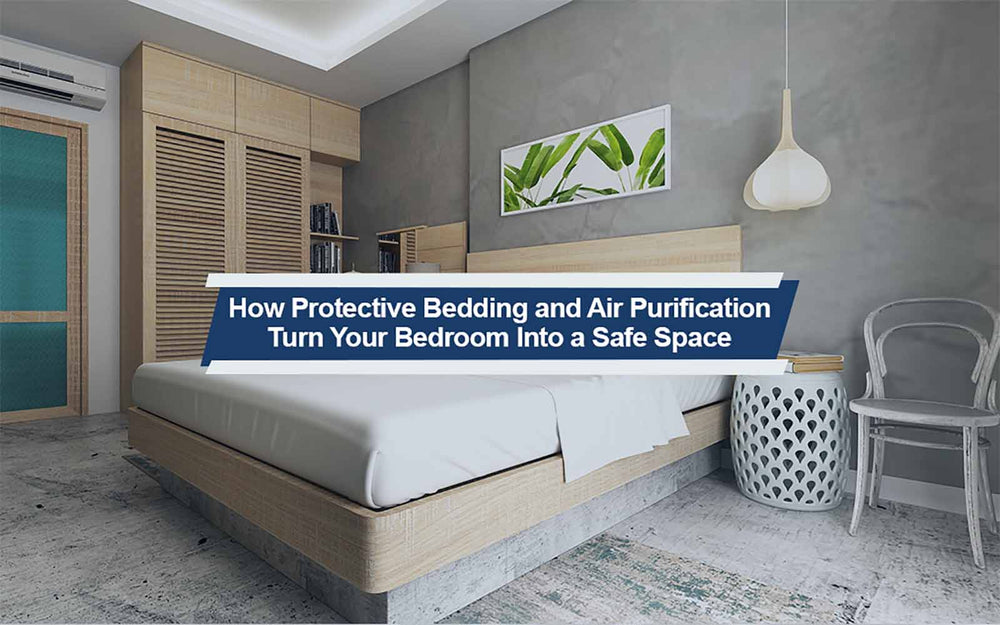
We're not talking about the socks on your floor. We mean the air you breathe all night long. Most of us never think about it, and that's completely understandable. You can't see it, and nothing about a quiet bedroom suggests there's anything to fix.
Here's the good news: a few simple changes to your bedding and your air can make a real difference. Let's walk through them together.
Why Bedroom Air Quality Matters
The air inside our homes isn't always cleaner than the air outside. According to the Environmental Protection Agency, indoor levels of some pollutants are often two to five times higher than typical outdoor levels. The EPA adds that many household products release VOCs (volatile organic compounds, which are chemicals that turn into gas at room temperature).
Your bedroom is where you spend hours every night, so small improvements here add up. The bedroom shares many pollutants with the rest of your home, but it has a few of its own. That brings us to the bed.
Start With Your Bedding
Your mattress, box spring, and pillows are cozy places for dust mites (tiny creatures that feed on skin flakes). The American Academy of Allergy, Asthma & Immunology describes these items as major sources of mites and their allergens. Allergens are proteins that can trigger an allergic reaction.
Washing is the first step. The same AAAAI guidance strongly recommends washing bedding weekly to lower mite numbers and allergen levels. It also says very hot water isn't necessary, and it advises keeping your home's hot water heater below 120°F to avoid scalds. Check the care labels on bulky items such as comforters before you wash them.
Next, consider covers. The AAAAI strongly recommends allergen-proof mattress, box spring, and pillow encasings. It favors tightly woven fabrics that keep allergens in while letting air and moisture vapor pass through. It also notes that covers alone are unlikely to be enough, so think of them as one piece of a bigger plan.
If you'd like to try them, browse our allergy bedding collection or our duvet and comforter covers. Knowing your bed is protected can make bedtime feel a little easier.
Cut Back on What Goes Into the Air
Bedding is only part of the picture. The next step is looking at what you bring into the room. The EPA says the most effective way to improve indoor air is to reduce or remove pollution sources, then ventilate with fresh outdoor air.
Cleaning products. A clean room is a good thing, but some products release VOCs while you use them. The EPA lists eye, nose, and throat irritation and headaches among the possible effects. It suggests following label directions and increasing ventilation when you use them. If you'd like gentler options, see our cleaning products.
New carpet. The EPA says new carpet, along with its adhesives and padding, gives off VOCs for a while after installation. Good ventilation, especially in the first 72 hours, can cut those emissions substantially. Carpet can also hold onto dust and allergens, so the AAAAI recommends vacuuming with a HEPA-filtered vacuum (one with a very fine particle filter).
Candles. We know candles feel relaxing. The American Lung Association says candles and incense can release pollutants into the air and suggests avoiding burning them indoors. A bedside lamp or a soft string light can set the same mood.
Add an Air Purifier to Catch the Rest
Even with good habits, some particles will still float around. That's where an air purifier comes in. The EPA explains that a HEPA (high-efficiency particulate air) filter can theoretically remove at least 99.97 percent of particles at 0.3 microns. That's the size that's hardest to capture, so larger and smaller particles are captured even more easily.
Research is encouraging too. The EPA notes that studies of portable HEPA air cleaners have found improvements in one or more allergy or asthma symptoms. It also says they don't improve every symptom. They can't remove every pollutant, and they don't replace source control or ventilation.
So treat a purifier as a helpful partner, not a cure-all. Our air purification collection is a good place to compare options for your bedroom.
Frequently Asked Questions
How often should I wash my bedding?
The AAAAI strongly recommends washing bedding weekly to reduce dust mites and their allergens. Hot water isn't necessary, and the AAAAI advises keeping your home's hot water below 120°F. Always follow the care label on bulky items.
Can an air purifier remove allergens from my bedroom?
A HEPA air purifier can capture many airborne particles, and the EPA notes that studies have found improvements in some allergy and asthma symptoms. It doesn't remove every pollutant, so it works best alongside regular cleaning and ventilation.
Why does new carpet smell, and should I worry?
The EPA says new carpet and its adhesives release VOCs for a period after installation. Ventilating well, especially in the first 72 hours, cuts those emissions substantially. If you notice irritation, talk with your healthcare provider.
Are candles bad for bedroom air quality?
The American Lung Association says candles and incense can release pollutants into indoor air and suggests avoiding burning them in the home. If you love the ambiance, lamps and string lights are a pollutant-free swap.
The Bottom Line
A cleaner bedroom doesn't have to be a big project. Wash your bedding weekly, cover your mattress and pillows, and cut back on what you add to the air. Then let a HEPA air purifier handle the rest. Celebrate each step, because every one of them helps you breathe a little easier at night.
Ready to freshen up your bedroom?
We've been helping people with allergies and asthma find the right products since 1989. Tell us what you're dealing with, and we'll point you in the right direction.
Call (800) 771-2246Want the complete picture? This page is part of our free Practical Guide to Allergy-Free Living, which covers dust mites, pet dander, air quality, laundry, and more. Start at the beginning or jump to the section that matters most to you.
Sources
U.S. Environmental Protection Agency. Indoor Air Quality.
U.S. Environmental Protection Agency. Volatile Organic Compounds' Impact on Indoor Air Quality.
U.S. Environmental Protection Agency. Guide to Air Cleaners in the Home.
U.S. Environmental Protection Agency. What is a HEPA Filter?
U.S. Environmental Protection Agency. Does Carpet Cause Indoor Air Quality (IAQ) Problems in Schools?
American Academy of Allergy, Asthma & Immunology. Environmental assessment and exposure control of dust mites: a practice parameter.
American Lung Association. Source Control.
Medical disclaimer: The information on this page is for educational purposes only and is not a substitute for professional medical advice, diagnosis, or treatment. Always consult a qualified healthcare provider, such as an allergist or your primary care physician, before making changes to your allergy management plan, starting new treatments, or if you have questions about a medical condition. In the event of a severe allergic reaction or anaphylaxis, call 911 or your local emergency number immediately and use an epinephrine auto-injector if one has been prescribed.