 Skip to main content


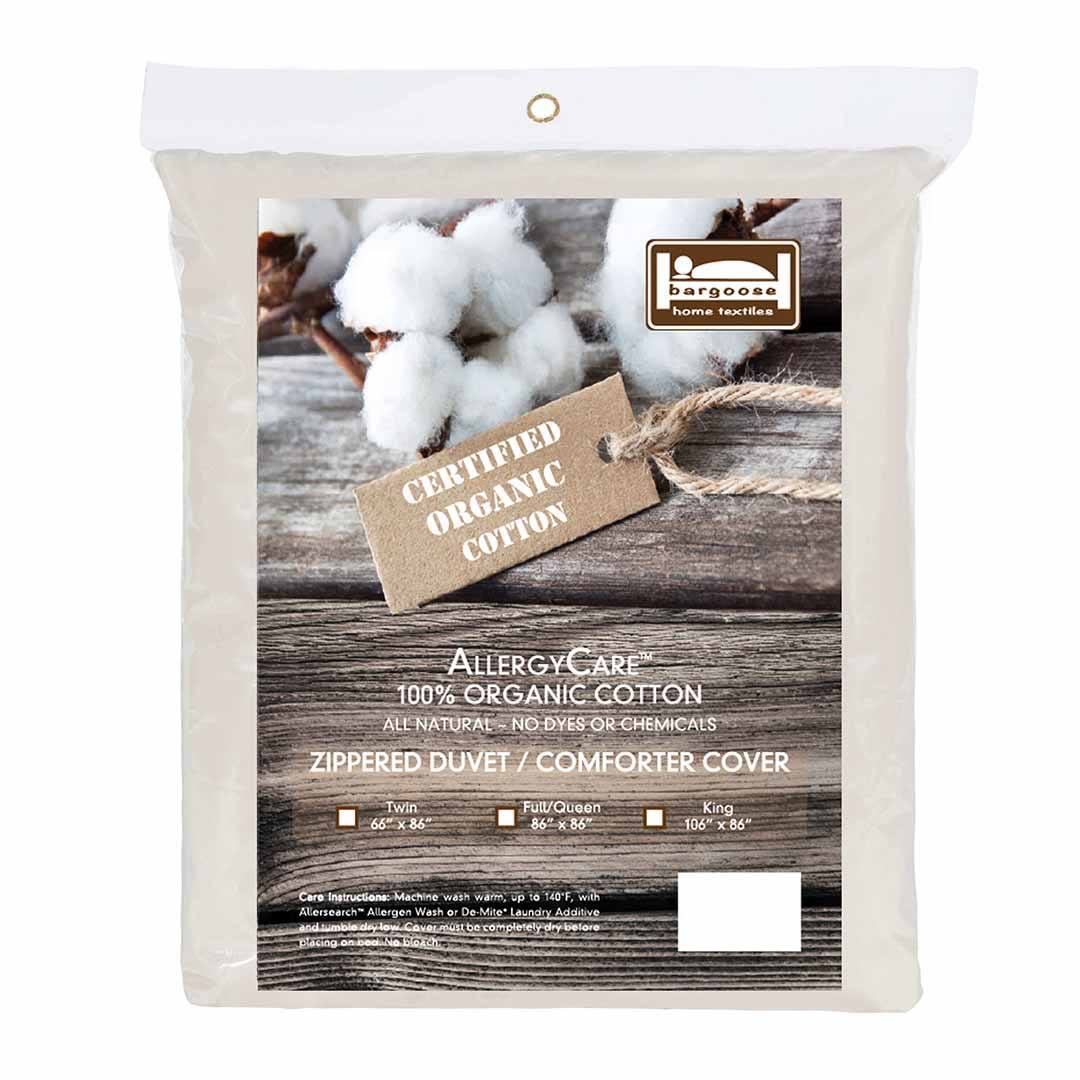

AllergyCare™ Organic Cotton Comforter Covers are for those who want a complete night-time allergy solution — without chemicals, coatings, or the crinkly plastic feel of synthetic covers. Woven from tightly woven, certified organic cotton that is non-dyed, non-treated, and chemical-free, this is the cover we recommend for anyone with chemical sensitivities or a preference for natural-fiber bedding.
Allergists have been recommending allergen-proof bedding encasements long before we opened our doors in 1989 — and the organic cotton version has been a consistent favorite among customers who want the softest, most natural option available.
Why Organic Cotton?
Standard cotton goes through significant chemical processing — bleaching, dyeing, and finishing treatments that leave residues in the fabric. For people with chemical sensitivities, eczema, or skin reactions, those residues can be a problem even in a well-made cover.
AllergyCare™ Organic Cotton is grown without synthetic pesticides or fertilizers and processed without dyes or chemical treatments. What you get is pure, breathable cotton fabric — soft, quiet, and completely free of the additives that can trigger reactions in sensitive individuals.
How It Works
Dust mites, their fecal matter, and decomposing body fragments accumulate deep inside comforters over time — and those particles are the actual allergens that trigger reactions. Waking up with irritated eyes, itchy skin, or sinus congestion is often a sign of exposure at night. You cannot wash them out of a comforter. The only effective solution is a complete physical barrier.
AllergyCare™ Organic Cotton Comforter Covers fully enclose your comforter with a zippered closure that leaves no gaps, plus corner ties to keep the comforter from shifting inside the cover. The tightly woven organic cotton fabric has a mean pore size of 4.74 microns — small enough to block dust mite allergen particles, pet dander, mold spores, and pollen. From the first night, you stop being exposed to the allergens that have been affecting your sleep.
- Certified organic cotton — non-dyed, non-treated, chemical-free.
- 4.74 micron mean pore size (PMI Test Results)
- 233 thread count — helps keep the cover cool and breathable.
- Zippered closure with heavy-gauge nylon zippers and coated rust-proof metal zipper pulls.
- Corner ties keep your comforter secure and in place inside the cover.
- Soft, breathable, and quiet — no crinkle, no plastic feel.
- No added chemicals or antimicrobial treatments.
- Natural cream color — undyed, unprocessed cotton, so slight shade variation is normal.
- Manufacturer's Limited Lifetime Warranty on construction.
Who It's Best For
- Anyone with chemical sensitivities or reactions to synthetic fabrics
- People with eczema or skin conditions who need an untreated natural fiber next to their skin
- Anyone who wants to turn an existing comforter — new or old — into allergy-sensitive bedding without buying a new one
- Parents who want chemical-free bedding protection for children
- Eco-conscious buyers who prefer certified organic materials
Already using an AllergyCare™ Organic Cotton mattress or pillow cover? The comforter cover completes a full allergen-barrier bedding system.
Get the Right Size
Comforter covers are available in Twin (66" x 86"), Full/Queen (86" x 86"), and King (106" x 86"). Choose the size that matches your comforter — the cover is designed to fit any comforter of that size, new or old, and the corner ties keep it from bunching or shifting once it's zipped up.
Easy Care Instructions
Machine wash your organic cotton comforter cover as you would any fine cotton fabric, in hot water up to 140°. Do not use chlorine bleach. Machine dry on medium setting.
Special Note: Wash with the zipper fully closed to protect the corner ties from fraying, and make sure the cover is completely dry before use.
Natural Cream Color. Our organic cotton has not been dyed or processed, so the natural cotton pigments can cause color variations. Like all 100% cotton products, this cover will shrink slightly when washed and dried for the first time. We have accounted for this and made the covers slightly larger — they will not be too small after the first wash.
Commonly asked questions
1. What is the difference between organic cotton and regular cotton comforter covers?
Standard cotton is processed with bleaches, dyes, and chemical finishing agents that leave residues in the fabric. AllergyCare™ Organic Cotton is grown without synthetic pesticides and processed without dyes or chemical treatments — making it the right choice for anyone with chemical sensitivities or skin reactions. Both fabrics provide equivalent allergen protection. The difference is in the chemical profile of the fabric itself.
2. Is this cover noisy or crinkly?
No. AllergyCare™ Organic Cotton is a micro-weave fabric — the tight weave of the cotton itself creates the allergen barrier, with no vinyl layers, plastic coatings, or membrane backing. It feels and sounds like regular cotton fabric. No crinkle, no noise, no plastic feel.
3. Is this cover safe for children and babies?
Yes. The fabric is non-dyed, non-treated, and free of VOCs, flame retardants, and synthetic coatings. It is a good choice for children with eczema, asthma, or allergies.
4. Do I need to wash the cover before first use?
No. It is not necessary. We do not treat any of our fabrics with chemicals or antimicrobial coatings. Please note that we do not accept the return of washed covers unless they are defective.
5. Can I use this over any comforter?
Yes. The cover is designed to fit any comforter of the matching size — new or old — so you don't need to replace a comforter you already love. Corner ties keep it in place inside the cover.
6. Which size should I order?
Match the cover size to your comforter size — Twin, Full/Queen, or King. If you are between sizes, choose the larger option.
Additional information
Why encasements are step one.
Allergen-proof covers for your mattress, box spring, and pillows are the single most effective environmental control step for dust mite allergy sufferers — identified as such by the AAAAI and ACAAI Joint Practice Parameter on dust mite exposure control. Our Practical Guide to Allergy-Free Living explains exactly how encasements work, which fabric is right for your sleep style, and how they fit into a comprehensive allergen-reduction strategy.