 Skip to main content


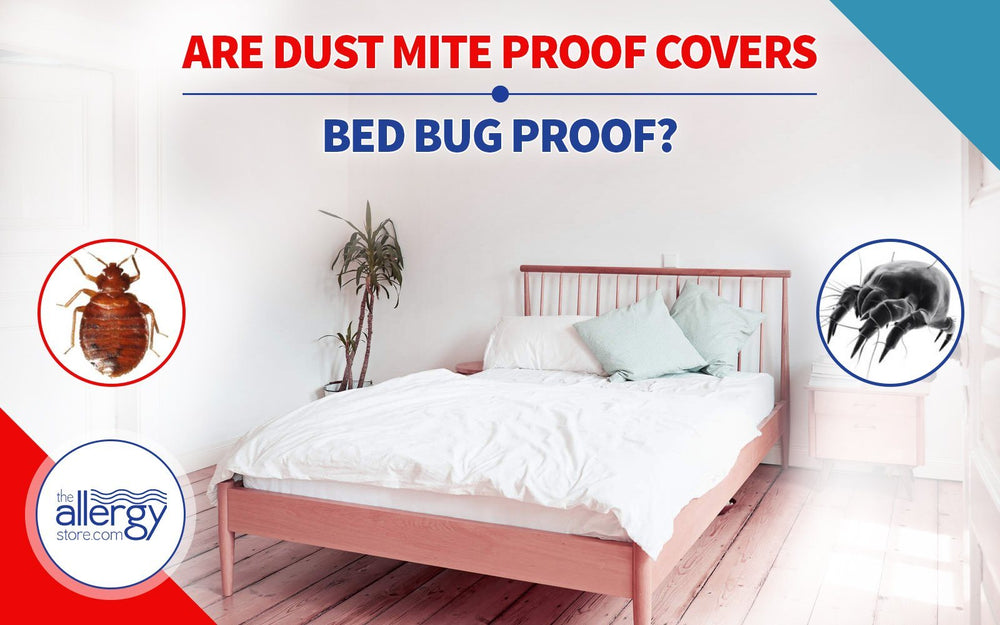
Any time bed bugs are in the news, our phones ring off the hook. Frequently our existing customers want assurances that their dust mite covers are also bed bug proof.
Dust Mite Proof Covers vs. Bed Bug Proof Covers
Dust mites are microscopic; you cannot see them. They are also not highly mobile. They live out their entire lives very close to where they hatch. Dust mites do not bite. They produce proteins that cause allergic reactions when inhaled.
Dust mite proof covers are designed to protect against dust mites and their allergens. The covers provide a barrier between the sleeper and any dust mites that are in a mattress, pillow, or duvet.
The encasings cover all sides of the object encased (whether it is a mattress, box spring, pillow, duvet, or feather bed/topper) and zip closed. As the sleeper moves, the dust mite allergens that get stirred up hit the dust mite proof cover and stay inside it instead of reaching you.
Bed bugs are larger and visible. They are highly mobile, which is why they spread so easily.
They crawl from surface to surface. Bed bugs feed on human (sometimes animal) blood. They have a feeding tube that they use to draw blood, and they can leave a bite mark behind when they finish feeding.
Bed bug covers are designed to protect against bed bugs. Like dust mite covers, bed bug covers completely encase the object they protect. Whether it is a pillow, mattress, box spring, or comforter, they cover all sides and zip closed. The EPA recommends covers that seal mattresses and box springs, because bed bugs trapped inside eventually die.
In addition, the back of the fabric has a urethane membrane that keeps bed bugs from pushing their feeding tube through the fabric and making a meal of you.
This means our bed bug covers also protect against dust mites and their allergens, but not every dust mite proof cover will protect against bed bugs.
Which Mattress Cover is Right for You?
If you have an active bed bug infestation, you must have bed bug covers to protect you from any bed bugs that are already in the mattress, box spring, pillow, or duvet.
Our AllergyCare Stretch Knit (BedBug Solution Elite) bed bug proof covers were designed with the help of pest control professionals and bed bug exterminators, and the fabric was independently tested by Snell Scientifics, LLC. They are bed bug proof, and they block dust mite allergens too.
A standard dust mite proof cover will not give you the protection you need if bed bugs are already present in the bed. The bugs will be trapped under the cover, but they may still be able to feed through the fabric.
If you don't have bed bugs now but want protection against ever having them, we still recommend the Stretch Knit. Our AllergyCare cotton micro-weave covers are excellent for dust mites, but they aren't rated as bed bug proof. A membrane cover protects you either way.
Summary
Our bed bug covers provide dust mite protection too. Dust mite covers alone won't protect you from an active infestation, and they aren't a substitute for a bed bug proof cover. If bed bugs are a concern, now or later, choose a membrane cover.
Not sure which cover fits your situation? Read our dust mite cover buying guide, or see Bed Bugs are Bad. Don't Get Bitten by Cover Costs Too. You can also call us at (800) 771-2246. We've been helping customers choose the right covers since 1989.
Wishing you the best of health,
Mike
Want the complete picture? This post is part of our free Practical Guide to Allergy-Free Living, built on allergy expertise we've been sharing since 1989 and covering dust mites, pet dander, air quality, laundry, and more.
Sources
U.S. EPA — Do-it-yourself Bed Bug Control: https://www.epa.gov/bedbugs/do-it-yourself-bed-bug-control
Medical Disclaimer: The information on this page is for educational purposes only and is not a substitute for professional medical advice, diagnosis, or treatment. Always consult a qualified healthcare provider — such as an allergist or your primary care physician — before making changes to your allergy management plan, starting new treatments, or if you have questions about a medical condition. In the event of a severe allergic reaction or anaphylaxis, call 911 or your local emergency number immediately and use an epinephrine auto-injector if one has been prescribed.